Intracellular proteomeA living cellular landscape establishes the context in which proteins are synthesized, maintained, trafficked, and degraded.
Newly synthesizedOlder
On larger screens, keep this open to reveal labeled molecular features.
Inspired by the lives of proteins. From molecular mechanisms to better medicine.
I am a PhD protein biologist and MD candidate working across proteomics, comparative biology, and translational neuroscience. Twelve years of protein-biology research coalesce with clinical training and independent computational work to inspire creative new ways to understand proteins and advance protein-based therapeutics.
Resolving protein populations by molecular ageProteome Birthdating barcodes proteins by their time of synthesis, enabling both conventional global turnover analysis and age-resolved investigation of specific protein subpopulations. The full temporal labeling series is encoded within a single biological sample, with the potential for extension to single cells. Combined with my experience in comparative biology, translational neuroscience, and independent computation, this framework is a catalyst for the protein-based drug-development programs I aim to help design and implement.
Training
University of Rochester Medical Scientist Training ProgramPhD, Cellular, Developmental & Molecular Biology · 2025University of RochesterMD candidate · expected May 2027University of Rochester School of Medicine & Dentistry
Clinical lens
Neuro-oncologyLongitudinal neuro-oncology experience grounds my protein-biology work in unanswered patient-centered questions at the intersection of neurology and oncology. I provide patients with warm and unhurried attention, caring for the whole person while striving to embody Rochester’s Biopsychosocial Model.
A living cellular landscape: ions cross membrane channels, cargo moves through nuclear pores, vesicles travel along cytoskeletal tracks, and organelles pulse around a crowded proteome.
Scientist, physician-in-training, translational protein biologist.
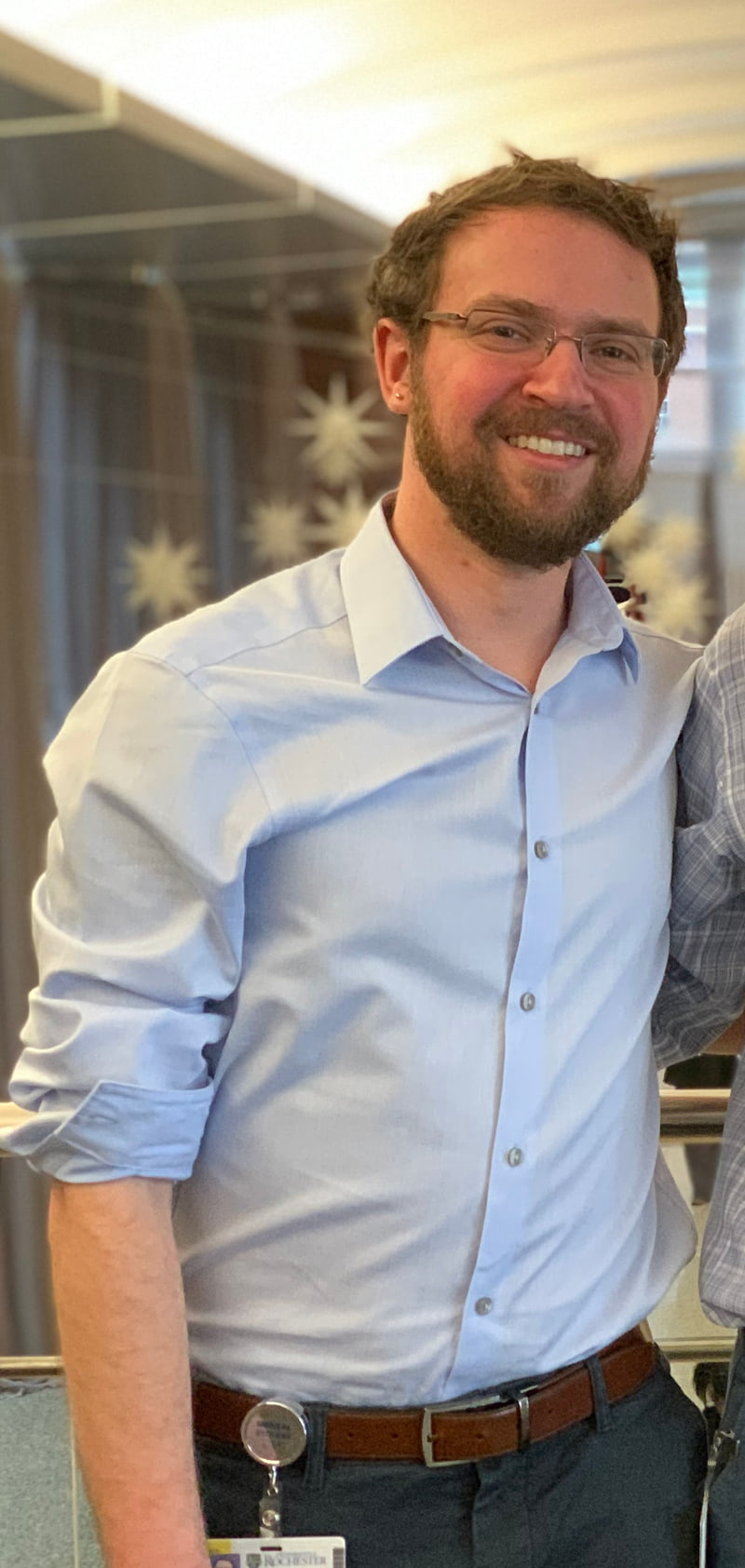
Michael E. Meadow, PhD
My path through protein biology began with ER-associated degradation in 2014 and quickly became an irrational passion for ubiquitin biology that has guided me ever since. During my PhD in the Ghaemmaghami and Gorbunova laboratories, I developed Proteome Birthdating to barcode proteins by their time of synthesis, or molecular age. I now bring that strong molecular foundation to my clinical training as an MD candidate at the University of Rochester School of Medicine & Dentistry.
University of RochesterGhaemmaghami and Gorbunova laboratoriesDissertationProteome Birthdating for Temporally Resolved Insights into Mammalian Aging
MD candidate · expected May 2027Clinical & translational medicine
University of Rochester School of Medicine & DentistryMedical Scientist Training ProgramClinical focusNeurology · oncology · neuro-oncology
Clinical experienceNeuro-oncology
Longitudinal experience with Nimish A. Mohile spanning clinic, tumor board, and division presentations.
Teaching & scientific educationFrom anatomy to protein biology
URMC Human Structure & Function tutor · 2020–2021. I enjoy turning complex molecular and clinical concepts into clear, visual, usable explanations through tutoring, scientific animation, and interactive tools.
Core identityUbiquitin biologist
Twelve years investigating how cells detect, modify, and degrade proteins.
Industry directionProtein-based drug development
Targeted degradation, proteomics, proteostasis, and computationally enabled discovery.
EvolutionMechanism medicine
2014
Rutgers RWJMS · introduction to ubiquitinKiran Madura laboratory · Studied Ubc7 and ER-associated degradation.
2015–2018
UCLA · protein biologyJames A. Wohlschlegel laboratory · Characterized the KCTD7 interactome and investigated ubiquitin–proteasome–autophagy crosstalk in pediatric neurodegenerative epilepsy.
2016–2018
UCLA · translational neuroscienceS. Thomas Carmichael laboratory · Contributed to a hydrogel-delivered interneuron-progenitor therapy for cortical stroke through animal efficacy studies, behavioral analysis, and immunohistochemistry.
2018–2019
UCLA · iPSC-derived cell therapyWilliam E. Lowry laboratory · Generated patient-derived glial progenitors across five donor lines.
2019–present
University of Rochester · MD/PhD trainingSina Ghaemmaghami and Vera Gorbunova laboratories · Proteome Birthdating for Temporally Resolved Insights into Mammalian Aging · PhD 2025 · MD expected May 2027.
Where I’m headed
Protein-based drug developmentBringing ubiquitin biology, proteomics, clinical training, and independent computation together to help design and implement protein-based drug-development programs.
Photo archive
Scientific homes
Selected photographs from the laboratories and training communities that shaped my path.
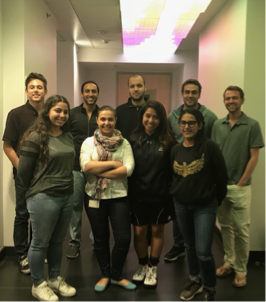
Sina Ghaemmaghami laboratoryUniversity of Rochester
Vera Gorbunova laboratoryUniversity of Rochester
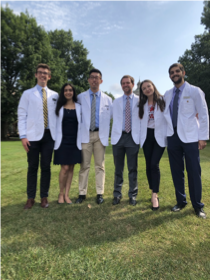
Medical Scientist Training Program cohortUniversity of Rochester
S. Thomas Carmichael laboratoryUCLA
Honors & awardsNational research recognition
ABTA Medical Student Summer Fellowship · AAN Medical Student Research Scholarship · US HUPO Travel Award · Invited Bio-protocol Webinar.
Scene 2 · Ribosome assembly
The large and small ribosomal subunits assemble around messenger RNA, ready to translate its sequence into a protein.
One cohesive body of science
A through-line across my portfolio: a protein’s cellular context helps shape its structure, function, interaction network, and potential contribution to disease.
Within a cell, proteins have distinct and highly variable half-lives, producing molecular ages that range from seconds to years. Yet how a protein’s age shapes its interactions with the cellular environment remains largely unexplored. To investigate the age selectivity of cellular pathways, I developed Proteome Birthdating, a mass spectrometry–based methodology that barcodes proteins according to their time of synthesis and encodes multiple labeling time points within a single biological sample and, in theory, within individual cells. The approach provides conventional turnover measurements while also resolving the age distributions of specific protein subpopulations. In its first use case, we conducted an age census of the human ubiquitinome. In human fibroblasts, our data indicated that newly synthesized proteins comprised the majority of ubiquitinated molecules and the bulk of measured proteasomal flux.
Complementary structural proteomics revealed that these rapidly degraded proteins often occupy non-native conformations and are ubiquitinated at lysines normally buried within their native structures. I have also published an accompanying practical Bio-protocol that translates Proteome Birthdating into an end-to-end workflow spanning cell culture, sequential isotopic labeling, protein extraction and digestion, peptide cleanup, LC-MS/MS acquisition, data processing, and interpretation. Together, these studies connect molecular age, structural integrity, and ubiquitin selection while establishing Proteome Birthdating as a robust and generalizable framework for investigating the age selectivity of diverse cellular pathways.
Comparative modelOctodon degusMichael E. Meadow · University of Rochester colony
Comparative biology reframes evolutionary diversity as a set of natural experiments. Mammals are particularly informative for studying longevity because they are phylogenetically related yet differ by more than 100-fold in maximum lifespan and span an extraordinary range of body sizes. Moreover, the longest-lived mammals occupy distinct evolutionary lineages, suggesting that longevity can arise through multiple biological routes. In one comparative study, we used a targeted proteomic approach across mammalian species to demonstrate that the presence and use of phosphorylation sites in the SIRT6 C-terminal domain correlate with maximum lifespan. Follow-up biochemical and computational studies suggested that this hyperphosphorylation may enhance PARP1 interaction. Further, targeted perturbation of one of these sites in human SIRT6 shifted cellular resistance to oxidative stress in both directions. This work illustrates how comparative proteomics can move from an evolutionary association to a specific molecular mechanism with potential therapeutic relevance.
A second emerging comparative thread uses the amyloidosis-prone rodent Octodon degus as a model of putative proteostatic deficiency. Here we set out to ask how long-lived mammals maintain their proteomes across extraordinary lifespans, particularly in post-mitotic neurons and the astrocytes that support them.
Working in translational neuroscience has taught me to move between molecular mechanisms, model systems, therapeutic design, and, ultimately, the patients these efforts are meant to serve. At UCLA, in the laboratory of James A. Wohlschlegel, I characterized the KCTD7 interactome and investigated crosstalk among the ubiquitin–proteasome and autophagy–lysosome systems in pediatric neurodegenerative epilepsy. This work helped define KCTD7 deficiency as a distinct, early-onset neurodegenerative disorder and implicated a conserved autophagy–lysosome defect in its pathogenesis.
Simultaneously, in the laboratory of S. Thomas Carmichael, I contributed to the development of a hydrogel-delivered interneuron-progenitor therapy for cortical stroke through animal efficacy studies, behavioral analysis, and immunohistochemistry. After graduating early, I completed a gap year as a Laboratory Assistant I in William E. Lowry’s laboratory, where I generated patient-derived glial progenitors across five donor lines. These cells ultimately formed the basis of preclinical studies evaluating a novel cell-based therapy for white-matter stroke and vascular dementia.
My work spans experimental design, sample preparation, and computational analysis. I have developed quantitative proteomics workflows on Orbitrap and Astral platforms using NeuCode and SILAC metabolic labeling, DDA, DIA, targeted acquisition, and diGly and phosphopeptide enrichment. At the bench, I have cultured primary and immortalized cell lines from more than 20 mammalian species and differentiated iPSC lines from five donors into glial-enriched progenitors.
Original schematicQuantitative interpretationSpectra · models · hypotheses · biological mechanism
My broader bench experience includes mass spectrometry sample preparation, CRISPR-based perturbation, immunoprecipitation and co-immunoprecipitation, Western blotting, qPCR, molecular cloning, biochemical activity assays, and immunohistochemistry. I analyze proteomic data using Proteome Discoverer, MaxQuant, DIA-NN, FragPipe, Skyline, and Perseus, then use Python, R, and Mathematica for statistical analysis, kinetic modeling, visualization, and reproducible workflows. For structural questions, I integrate AlphaFold models, PyMOL, and in-house solvent-accessibility analyses. I have applied this toolkit to proteome-wide and targeted turnover measurements, post-translational-modification mapping, comparative proteomics, patient-derived disease models, and translational neuroscience.
Scene 3 · Translation
Translation converts an mRNA sequence into a growing polypeptide or protein.
Independent works
Three works in development spanning computational biology, experimental design, and molecular storytelling.
Projects
AI
Computational & AI Biology
Model building, benchmarking, and biological prediction, beginning with unseen-context perturbation response.
Modeling unseen cell contexts for the 2026 Virtual Cell Challenge
In development
A computational biology project on predicting CRISPRi responses in unseen cell contexts, with explicit model design, validation logic, leakage checks, failure analysis, and public-safe results.
Tools
Mickie’s Proteomic Discovery Framework
Experimental design informed by molecular age, beginning with Proteome Birthdating.
BIRTHDATER
In development
An applied Proteome Birthdating workbench that moves from a biological question to a sequential labeling scheme and modeled molecular-age cohorts, supported by a half-life inventory, kinetic fitting, and candidate-degron scan.
Animations
Original Animations
Visual stories about protein lifetimes and the molecular events that shape disease and treatment.
2(Ub) or Not 2(Ub)
In development
An unfinished protein acquires a K48 chain, reaches the proteasome, and receives a deubiquitinase-mediated reprieve in this mechanism-first rough cut.
Scene 4 · Ribosome-associated quality control
After a stalled ribosome is split, NEMF and Listerin help mark an aberrant nascent protein with ubiquitin for degradation.
Selected publications
My publications span proteomics, comparative biology, and translational neuroscience. Together, they reflect rigorous training and a unique, dynamic toolset for translating basic protein insights toward therapeutic discovery.
12 yearsUbiquitin biology
From ERAD and E3 adaptors to turnover and the proteasome.
First-author platformProteome Birthdating
Primary research paper with a reproducible open protocol.
Cross-disciplinaryComparative protein biology × neurology
Mechanistic depth with clinical and translational training.
Industry directionProtein-based therapeutic discovery
Targeted protein degradation, proteostasis, and discovery-proteomics roles.
Selected publicationsPeer-reviewed literature
Year
Authorship
Publication
2026
Co-first author
Long-lived mammals contain more phosphorylation sites in the SIRT6 C-terminus that enhance PARP1 interaction and resistance to oxidative stressGeroScience · DOI
2026
Third author
Structural proteomics reveals that misfolded nascent proteins expose buried lysines for ubiquitination and rapid proteasomal degradationCell Reports · DOI
2026
Co-author
cGAS-deficient mice display premature aging associated with derepression of LINE1 elements and inflammationNature Aging · DOI
2025
First author
Proteome Birthdating: A single-sample approach for measuring global turnover dynamics and “protein age”Bio-protocol · DOI
2024
First author
Proteome birthdating reveals age-selectivity of protein ubiquitinationMolecular & Cellular Proteomics · DOI
2021
Third author
Reliable generation of glial enriched progenitors from human fibroblast-derived iPSCsStem Cell Research · DOI
2018
Co-author
KCTD7 deficiency defines a distinct neurodegenerative disorder with a conserved autophagy–lysosome defectAnnals of Neurology · DOI
A K48-linked ubiquitin chain presents the ubiquitinated substrate to the 26S proteasome for recognition, unfolding, and processing.
Let’s build something together.
I am open to a variety of industry or independent opportunities in proteostasis and protein-based therapeutic discovery. I will complete my MD in May 2027 and am available for part-time work until then and full-time work thereafter. Please find all of my relevant links below. I look forward to building something excellent together!